
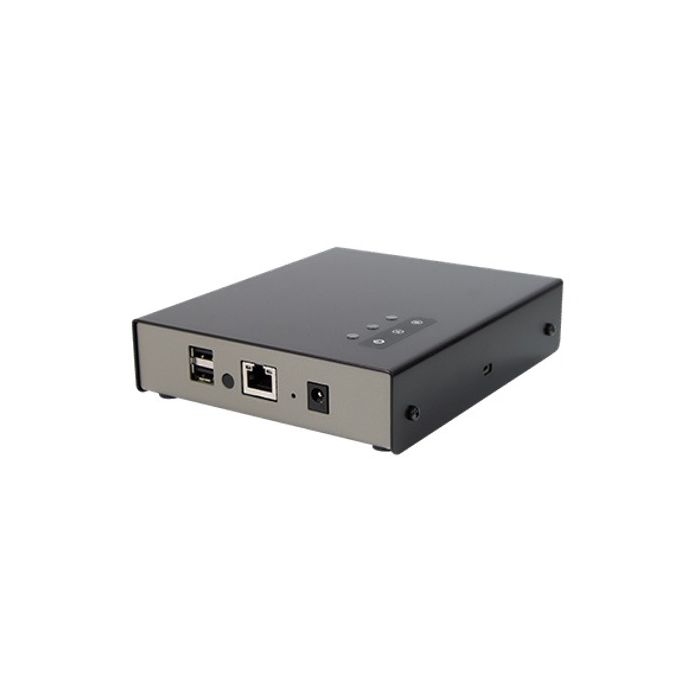
Motorola Dockcontroller DC-200, PSU, US Power & LAN Cable (DC-200-US)
In stock
- PHẦN #:
- DC-200-US
- AVAILABILITY:
- SUBJECT TO AVAILABILITY
- SKU:
- Motorola-DC-200-US
Motorola Dockcontroller DC-200, PSU, US Power & LAN Cable (DC-200-US)
Motorola Dockcontroller DC-200, PSU, US Power & LAN Cable (DC-200-US)
Within Motorola’s body-worn video ecosystem, the DC-200 is not itself a camera dock. Instead, it acts as the central controller that links several docks to the network and management software, simplifying large deployments where many cameras must be docked, charged, assigned, and offloaded at the same time. Motorola’s official data sheet states that the DC-200 is typically used connected to VideoManager over Ethernet, with multiple docks attached via USB, and that it supports VideoManager 11 onwards.
The DC-200-US package refers specifically to the U.S. version of the DockController bundle and is sold with the power supply unit, U.S. power cable, and LAN cable. Motorola’s shop lists the exact product as “DOCKCONTROLLER DC-200, PSU, US POWER & LAN CABLE” under part number DC-200-US.
For buyers searching terms such as Motorola DC-200-US, Motorola DockController for VB400, VideoManager dock controller, or body camera dock network controller, the DC-200-US is best understood as the infrastructure component that allows a larger body camera installation to scale beyond a single desk dock. It is especially relevant in law enforcement, private security, transport safety, and other operations where many cameras must be managed centrally. Motorola’s product page explicitly states that it can connect up to 84 VB or VT Series cameras simultaneously to VideoManager over a single gigabit Ethernet port.
Introduction / Overview
The DockController DC-200 belongs to Motorola Solutions’ body-worn camera ecosystem, where docking hardware, RFID accessories, and VideoManager software work together to support evidence capture, footage offload, charging, and allocation. Motorola’s official product page describes the DC-200 as a camera dock management device that lets users configure and offload footage from up to 84 VB or VT Series cameras.
The core purpose of the device is aggregation. Rather than requiring each dock to connect directly to a PC or server, the DC-200 allows several docks to be attached by USB while the controller handles network connectivity back to VideoManager. Motorola’s data sheet summarizes this usage as “Connected to VideoManager over Ethernet, with multiple docks attached via USB.”
This architecture matters in larger deployments. A small organization with one or two cameras might rely on simple desktop docks, but a police station, transport depot, or security control room may need to handle dozens of body cameras at shift change. In those environments, the DC-200 serves as the central bridge between camera docks and the evidence-management system. Motorola’s shop page further states that the controller interconnects multiple 1-port and 14-port docks, which makes it suitable for multi-bay installations.
The DC-200-US naming convention identifies the U.S. regional package. Motorola’s data sheet lists the broader family as DC-200/UK, DC-200/EU, DC-200/US, DC-200/AUS, and DC-200/ROW, confirming that the hardware is sold in region-specific bundles primarily differentiated by power accessories and market packaging.
Design and Features
Centralized Dock Management
The defining feature of the DC-200 is centralized control of multiple docks. Motorola states that one DC-200 can support up to 84 body-worn cameras, which reflects its role as a controller for larger docking environments rather than as a one-camera accessory. The same data sheet also states that the device can manage multiple connected docks over USB while maintaining a single Ethernet path to VideoManager.
This approach reduces cable sprawl and can simplify installations where multiple docks are placed away from the main PC or server. An older Motorola-era technical sheet describes the DC-200 as allowing up to six seven-port or fourteen-port docking stations to be physically located away from the PC or server running VideoManager, while still using a single gigabit Ethernet link for centralized control.
Gigabit Ethernet Connectivity
Motorola’s product page and shop listing both emphasize Gigabit Ethernet LAN as a key capability. This matters because footage offload can be bandwidth-intensive, especially in deployments where many cameras are returned and docked at the same time. Gigabit Ethernet allows the controller to move data more efficiently than a lower-speed network connection, helping support large-scale end-of-shift uploads.
Support for RFID-Enabled Allocation
Motorola’s DC-200 documentation also ties the controller to faster camera allocation when used with the RF-220 RFID reader. The official product page says the DC-200 supports efficient camera allocation when used with the RFID reader, which means the controller is not only about upload and charging infrastructure but also about identity-linked deployment workflows.
Regional Package Contents
The exact DC-200-US listing on Motorola’s shop identifies the bundle as including the DockController DC-200, PSU, US power, and LAN cable. That wording indicates the product is sold as a deployment-ready package for U.S. buyers, rather than as controller hardware alone.
Compatibility with VB and VT Series Cameras
Motorola’s official product page states that the DC-200 supports VB or VT Series cameras, while the shop and reseller ecosystem repeatedly associate it with VB400 deployments. This makes the controller especially relevant for organizations using Motorola’s body-worn camera family rather than general-purpose USB devices.
Technology and Specifications
Core Technical Specifications
Motorola’s official DC-200 data sheet lists the following main specifications:
- Product codes: DC-200/UK, DC-200/EU, DC-200/US, DC-200/AUS, DC-200/ROW
- Typical usage: Connected to VideoManager over Ethernet, with multiple docks attached via USB
- Management software: VideoManager 11 onwards
- Warranty: 1 year return to manufacturer warranty
- Dimensions: 154.4 mm x 135.5 mm x 37 mm
- Weight: 660 g
These details place the DC-200 in the category of compact fixed infrastructure rather than desktop-only consumer equipment.
Scalability
A major specification is scale. Motorola states that one DC-200 can connect up to 84 body-worn cameras. On the product page, the company phrases this as support for up to 84 VB or VT Series cameras simultaneously over a single gigabit Ethernet LAN port.
This is one of the strongest indicators that the DC-200 is intended for enterprise or institutional deployments, where many cameras are managed as a coordinated fleet.
Network and Peripheral Interfaces
Motorola’s official materials describe the DC-200 as using Ethernet for VideoManager connectivity and USB for attached docks. Reseller summaries also mention USB connectivity for data transfer and 12V DC input voltage, although the primary source of truth for overall usage remains Motorola’s own documentation.
Installation and Configuration
The Quick Start Guide for the DC-200 includes sections on operating modes, LED behavior, configuring using a USB mass storage device, Touch Assign, RFID RF-220 troubleshooting, and firmware upgrades. That suggests the platform is intended to be configurable in real deployments rather than simply plug-and-play in the consumer sense.
Applications and Use Cases
Police and Public Safety Deployments
The DC-200 is especially suitable for police stations, public safety agencies, and transport enforcement operations where many body-worn cameras must be checked back in at the end of a shift. Because it aggregates multiple docks and routes them to VideoManager over Ethernet, it fits structured evidence workflows where upload reliability and central management are critical. This is an inference based on Motorola’s stated support for large numbers of VB and VT cameras and its role in body-worn camera ecosystems.
Private Security and Corporate Operations
Large private security teams, campus safety groups, and industrial security operators can also benefit from a DC-200-based setup. In such environments, centralized docking helps ensure cameras are charged, footage is offloaded, and camera availability is visible at a single control point. Motorola’s product positioning toward dock management and efficient allocation directly supports this use case.
Transport and Field Service Teams
Any operation using Motorola VB or VT Series cameras across multiple staff members can use the DC-200 to centralize shift handover. This may include transit systems, parking enforcement, rail operations, or field inspection teams where many devices need to be returned and reissued daily. This is a practical inference from the platform’s scale and VideoManager integration.
RFID-Linked Checkout Stations
When paired with the RF-220, the DC-200 supports more efficient camera allocation. This makes it useful in controlled issue environments where staff identify themselves using an RFID credential and receive an assigned camera through a repeatable, documented workflow.
Advantages / Benefits
Scalable Camera Management
The most important benefit of the DC-200 is scale. Support for up to 84 cameras on one controller makes it suitable for much larger deployments than a basic single-dock setup.
Cleaner Infrastructure
By aggregating docks through USB and presenting a single Ethernet connection to VideoManager, the DC-200 can simplify installation layout and reduce the need for direct PC connections at every dock location. Motorola’s documentation describes exactly this Ethernet-plus-USB topology.
Faster Footage Transfer
Motorola explicitly highlights Gigabit Ethernet LAN for rapid footage download, making the controller useful where many cameras are uploading evidence in parallel.
Better Allocation Workflows
The ability to support RFID-based allocation with the RF-220 means the DC-200 can be part of a more structured and secure camera assignment process, not just a charging and upload hub.
Regional Deployment Convenience
The DC-200-US package includes the PSU, U.S. power lead, and LAN cable, which reduces guesswork for U.S. buyers and makes procurement simpler.
FAQ Section
What is the Motorola DockController DC-200-US?
The Motorola DockController DC-200-US is a dock management device for Motorola body-worn camera systems. It connects multiple docks to VideoManager over Ethernet and is sold in a U.S. bundle with the PSU, U.S. power cable, and LAN cable.
How does the Motorola DC-200-US work?
It works by connecting to VideoManager over Ethernet while linking multiple camera docks through USB. This lets one controller manage many connected docks and cameras in a centralized system.
Why is the Motorola DC-200-US important?
It is important because it enables larger-scale body camera deployments, supporting up to 84 VB or VT Series cameras and helping organizations offload footage and manage camera assignment more efficiently.
What are the benefits of the Motorola DC-200-US?
Its main benefits are scalable dock aggregation, gigabit Ethernet footage transfer, centralized VideoManager connectivity, support for up to 84 cameras, and compatibility with RFID-based allocation workflows.
Which cameras work with the Motorola DC-200?
Motorola states that the DC-200 supports VB or VT Series cameras, and its shop page specifically highlights VB400 support in aggregated deployments.
Summary
The Motorola DockController DC-200, PSU, US Power & LAN Cable (DC-200-US) is a scalable dock management controller for Motorola body-worn camera deployments. By linking multiple docks to VideoManager over Gigabit Ethernet, supporting up to 84 VB or VT Series cameras, and enabling more efficient allocation workflows when paired with the RF-220, it serves as a central infrastructure component for larger camera fleets. For organizations looking for a Motorola body camera dock controller that can support enterprise-style charging, upload, and assignment workflows, the DC-200-US is one of the key products in the platform.
Specifications
| PHẦN # | DC-200-US |
|---|