
Motorola RFID RF-220 Reader & Base (MIFARE,MULTI-ISO, And LF) (RF-220)
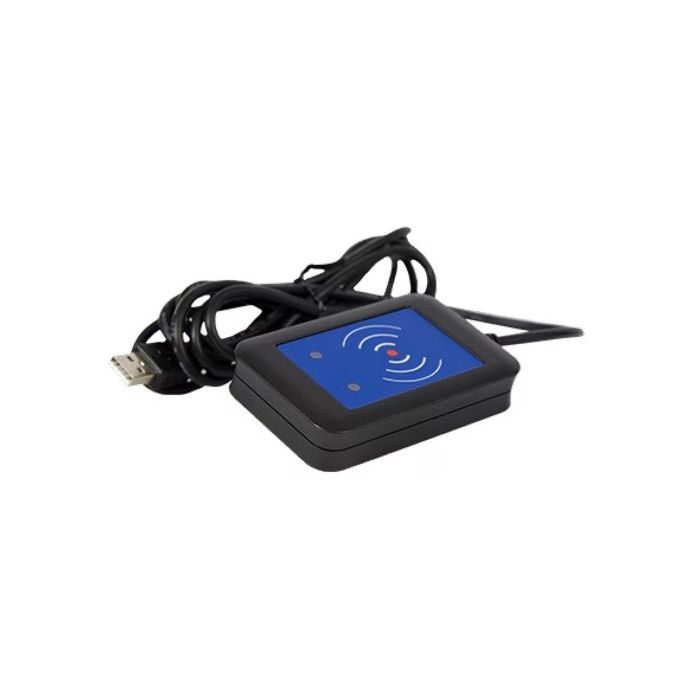
In stock
- PHẦN #:
- RF-220
- AVAILABILITY:
- SUBJECT TO AVAILABILITY
- SKU:
- Motorola-RF-220
Motorola RFID RF-220 Reader & Base (MIFARE,MULTI-ISO, And LF) (RF-220)
Motorola RFID RF-220 Reader & Base (MIFARE,MULTI-ISO, And LF) (RF-220)
What makes the RF-220 notable is its support for multiple card technologies. Motorola’s current data sheet lists both low-frequency 134.2 kHz and high-frequency 13.56 MHz support, with compatibility for card standards including ISO14443A such as MIFARE Classic, ISO15693 such as ICODE SLIX, and EM Marin EM4305 low-frequency tags. Motorola also notes that support is available in VideoManager 9.1 onward for high- and low-frequency cards.
For buyers searching terms such as Motorola RF-220 RFID reader, RF-220 reader and base, Motorola body camera RFID reader, or MIFARE Multi-ISO LF RFID reader for VB400, the RF-220 is best understood not as a general-purpose desktop access-control reader, but as a specialized accessory for rapid body camera allocation. Motorola explicitly markets it as a tool for secure and efficient camera assignment using an organization’s existing RFID credentials.
Introduction / Overview
The RF-220 sits within Motorola Solutions’ wider video security and access control ecosystem, specifically around body-worn camera management. Motorola states that the reader is designed to speed up the process of checking cameras in and out to individual staff members. Instead of manually selecting a user in software, a staff member can present a supported RFID credential to the RF-220 and collect the assigned camera from the connected dock workflow.
This positioning is important. The RF-220 is not simply an RFID badge reader sold in isolation. Its value comes from how it integrates into a camera-allocation workflow built around Motorola’s DockController DC-200, EC-220, and VideoManager software. Motorola’s published materials consistently frame the device as part of a broader secure evidence-management environment rather than as a generic industrial RFID peripheral.
The current Motorola data sheet identifies the RF-220’s typical usage as being attached to a DC-200 or EC-220 via USB connection, and it includes a snap-in holder for mounting to a flat surface. That makes the device suitable for fixed-position deployment at issue points such as police stations, security control rooms, transport depots, or equipment rooms where body cameras are stored and collected.
Design and Features
Compact Form Factor
Motorola’s RF-220 data sheet lists the device at 3.5 x 2.2 x 0.7 inches (88 x 56 x 18 mm) and 4.1 oz (115 g). These dimensions indicate a small desktop or wall-adjacent reader rather than a bulky industrial terminal. The included snap-in holder is intended to secure the reader to a flat surface, which supports tidy, repeatable deployment in issue and return areas.
Multi-Technology RFID Support
One of the RF-220’s main advantages is its support for multiple credential technologies. Motorola’s current and earlier specification sheets list low-frequency 134.2 kHz and high-frequency 13.56 MHz operation. Supported standards include ISO14443A, ISO15693, and EM4305, which broadens compatibility with many existing organizational credential schemes. Motorola also uses the product naming itself to highlight support for MIFARE, MULTI-ISO, and LF.
Body Camera Allocation Workflow
Motorola describes the RF-220 as a way to make body camera allocation “quicker and easier” by using an organization’s existing ID or access cards. In practice, that means the reader reduces friction in equipment issue workflows. Staff can identify themselves with a card or tag instead of relying only on manual camera assignment steps. Motorola specifically ties the RF-220 to secure and efficient allocation of VB and VT Series cameras.
Compatible Ecosystem
Motorola and resellers identify the RF-220 as compatible with the VB400 Camera, and reseller listings also associate it with DC-200, V200, VB400, and VT100 environments. While reseller pages expand the compatibility description, Motorola’s own pages clearly anchor the reader within the VB/VT Series body-worn camera ecosystem.
Technology and Specifications
Core Technical Specifications
According to Motorola’s published RF-220 data sheet, the reader has the following core characteristics:
- Marketing name: RF-220
- Typical usage: Attached to a DC-200 or EC-220 via USB
- Management software: VideoManager 9.1 onwards for high- and low-frequency card support
- Warranty: 1 year return to Motorola Solutions warranty
- Included accessory: Snap-in holder
RFID Frequencies and Read Performance
Motorola lists two operating frequencies:
- Low Frequency: 134.2 kHz
- High Frequency: 13.56 MHz
The published read/write distance is listed as 4 inches (100 mm) for both low-frequency and high-frequency operation. That short-range design is consistent with intentional, close-presentment use at an equipment checkout point rather than long-range ambient tracking.
Supported Card Standards
Motorola’s spec sheet lists supported compatible card standards including, but not limited to:
- ISO14443A such as MIFARE Classic
- ISO15693 such as ICODE SLIX
- EM Marin EM4305
This matters because many organizations already use RFID cards or tags for access control and staff ID. The RF-220’s multi-standard support reduces the need to issue a separate, proprietary badge solely for camera collection. That is an inference based on Motorola’s stated support for existing ID or access cards.
Applications and Use Cases
Body-Worn Camera Issue and Return
The clearest use case is body-worn camera allocation. Motorola directly states that the RF-220 is used to make camera assignment quicker and easier, especially in conjunction with docking hardware and VideoManager. This is likely most relevant in law enforcement, private security, transport safety, corrections, municipal enforcement, and similar operational settings.
Using Existing Staff ID Credentials
Because Motorola says the reader works with an organization’s existing ID or access cards, the RF-220 is useful in environments that already run credential-based access systems. That can simplify onboarding and reduce workflow errors by linking camera collection to identity credentials already carried by staff.
Fixed Allocation Points
The USB-attached, holder-mounted design suggests the RF-220 is best deployed at fixed issue points rather than as a mobile handheld reader. Police equipment rooms, security operations centers, depot offices, and camera issue counters are all logical deployment examples based on the design and intended usage Motorola describes.
Advantages / Benefits
Faster Camera Assignment
Motorola’s central value proposition is speed. The RF-220 is intended to make allocation quicker and easier, reducing friction in daily equipment issue workflows.
Better Identity Control
By relying on staff RFID credentials, the reader can improve the consistency of camera assignment compared with manual processes. Motorola frames this as a more secure and efficient experience.
Broad Credential Compatibility
Support for MIFARE, Multi-ISO, and LF credential types makes the RF-220 more flexible than a single-standard reader. Organizations may be able to use existing badge infrastructure instead of issuing separate tokens.
Simple Physical Deployment
The device is compact, USB-connected, and ships with a snap-in holder, which makes installation relatively straightforward in controlled indoor environments.
FAQ Section
What is the Motorola RFID RF-220 Reader & Base?
The Motorola RF-220 is a compact RFID reader accessory used to make the allocation of Motorola body-worn cameras quicker and more secure. It connects to a DC-200 or EC-220 and works with VideoManager.
How does the Motorola RF-220 work?
It works by reading supported RFID cards or tags presented at short range and using that credential within Motorola’s body camera allocation workflow. Motorola says it enables camera assignment using an organization’s existing ID or access cards.
Why is the Motorola RF-220 important?
It is important because it speeds up and standardizes the assignment of body-worn cameras, which can improve operational efficiency and reduce manual checkout steps. Motorola specifically markets it as a secure and efficient allocation tool.
What are the benefits of the Motorola RF-220?
Its main benefits are faster body camera allocation, support for existing RFID credentials, multi-standard card compatibility, compact installation, and integration with Motorola’s docking and management ecosystem.
What RFID standards does the Motorola RF-220 support?
Motorola lists support for ISO14443A including MIFARE Classic, ISO15693 including ICODE SLIX, and EM Marin EM4305, with operation at 13.56 MHz and 134.2 kHz.
Summary
The Motorola RFID RF-220 Reader & Base (RF-220) is a specialized RFID accessory built to streamline the allocation of Motorola body-worn cameras. With support for MIFARE, Multi-ISO, and low-frequency credentials, compatibility with DC-200/EC-220 workflows, and integration with VideoManager 9.1 onward, it serves as a practical tool for organizations that want faster, more consistent, and more secure camera assignment. For buyers looking for a Motorola RFID reader for VB400, V200, or VT Series camera allocation, the RF-220 is a focused and well-documented solution.
Specifications
| PHẦN # | RF-220 |
|---|