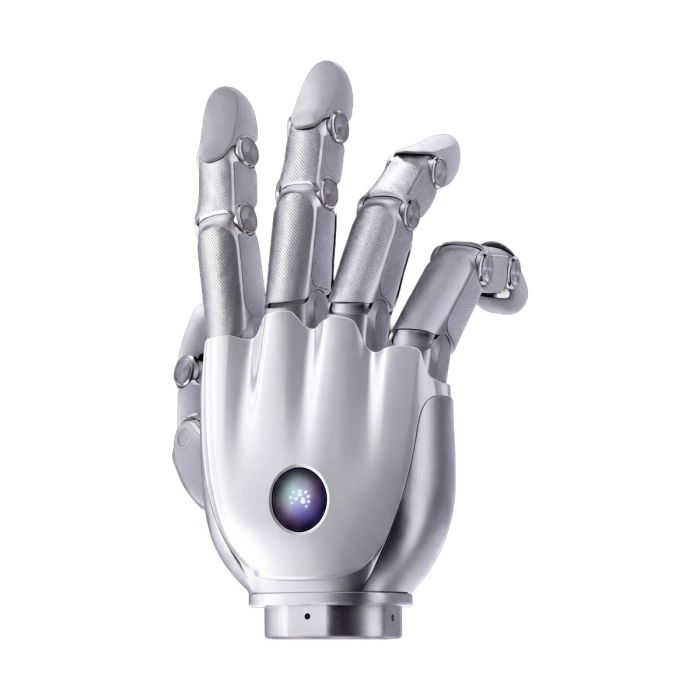
BrainCo Revo 3-21 Touch Robot Hand
In stock
- 상표:
- BRAINCO
- 모델:
- REVO 3-21 TOUCH
- ORIGIN:
- 중국
- Warranty:
- 12 MONTHS
- AVAILABILITY:
- SUBJECT TO AVAILABILITY
- SKU:
- BrainCo-Revo-3-Touch
BrainCo Revo 3-21 Touch Robot Hand
BrainCo Revo 3-21 Touch Robot Hand: Comprehensive Guide, Specifications, and Applications
BrainCo was founded in 2015 by Han Bicheng, a Chinese engineer who was pursuing doctoral research at Harvard University's Center for Brain Science. The company was incubated at the Harvard Innovation Lab and has grown into one of China's most prominent neurotechnology firms, recognized as one of Hangzhou's "Six Little Dragons" alongside Unitree Robotics and AI company DeepSeek. BrainCo's prosthetic hand received FDA clearance as a Class II medical device in November 2022, and the company holds more than 360 patents in brain-computer interface and related technology fields. The Revo product line transfers that prosthetics engineering heritage into commercial robotic end-effectors for the booming humanoid and embodied AI market.With 21 degrees of freedom distributed across a fully direct-drive, backdrivable joint system, the Revo 3-21 Touch is designed to perform the kind of contact-rich, in-hand manipulation that humanoid robots and advanced automation platforms require in real-world environments. It runs a 500 Hz control loop supporting four distinct control modes, covers 33 grasp types, exceeds the typical human hand's range of motion in standardized Kapandji testing, and supports industrial communication protocols including EtherCAT, CAN FD, and RS-485, with a broad operating voltage range of 12 to 80 volts.
Design and Features
Human-Scale Form Factor with Modular Configuration
The Revo 3-21 Touch maintains BrainCo's established design philosophy of building robotic hands at human scale. The Revo 2 series set the benchmark with a 160 x 76 millimeter form factor and approximately 383 gram mass, proportions comparable to an average adult female hand. The Revo 3 is physically larger and heavier than the Revo 2, reflecting its expanded joint count and sensing architecture, but it retains an anthropomorphic geometry designed to fit standard humanoid robot forearm interfaces and to interact with the objects, tools, and environments that human hands encounter.
The hand's modular design supports different finger configurations, allowing integrators to adapt the hardware for specific tasks or platform requirements without procuring an entirely different end-effector. This modularity is consistent with how BrainCo has marketed the broader Revo line to both research institutions and commercial robot manufacturers who need the ability to reconfigure their hardware as their application requirements evolve.
Direct-Drive Joint Architecture
All 21 degrees of freedom in the Revo 3-21 Touch use direct-drive actuation, where each motor couples its output shaft directly to the corresponding joint without an intermediary gearbox, tendon, or linkage transmission. This design decision carries several important consequences for the hand's behavior in contact-rich manipulation.
Without a transmission in the force path, the joint does not absorb or distort the forces exchanged between the fingertip and whatever object the hand is touching. Motor current, which is proportional to the torque the motor is generating, becomes a direct proxy for contact force at the joint. This means the hand has an inherent sense of touch through its motors, a capability that is unavailable in transmission-based systems where friction and compliance within the gearbox obscure the force signal.
Backdrivability, the ability for an external force to move the joint when the motor is not actively resisting it, follows naturally from the direct-drive approach. A backdrivable joint complies gently when an object pushes against the finger, enabling natural, safe interaction with objects and people. Combined with the dedicated tactile sensors on the palm and fingertips, this joint-level compliance makes the Revo 3-21 Touch capable of multi-modal contact sensing: pressure-array sensing at the surface level and torque sensing at the joint level simultaneously.
Full-Palm Tactile Sensing
The most architecturally distinctive feature of the Revo 3-21 Touch relative to prior generations is the integration of full-palm tactile sensing at 0.01 Newton force resolution. Earlier tactile sensing in BrainCo's hands was concentrated at the fingertips, following the conventional design pattern in dexterous hand research where fingertips are the primary contact surfaces for precision grasping.
Full-palm sensing extends the contact-aware surface across the broad, flat area of the palm itself. This matters in practice for several reasons. Many real-world manipulation tasks involve the palm making contact with objects during power grasps, cradling, or supporting large flat surfaces. Without palm sensing, the hand's control system is effectively blind to a large portion of its own contact state during these tasks. Palm sensing also enables the detection of light, incidental contacts during navigation or interaction, which is relevant for human-robot interaction safety.
At 0.01 Newton resolution, the palm sensor array can detect contacts far lighter than those that would be mechanically significant, providing early warning of approaching contact before forces build to levels that could cause damage or instability. This resolution is substantially finer than most tactile sensor arrays in current robotic hands, which typically operate at force resolutions in the 0.1 to 1 Newton range.
Fingertip Tactile and Visual Sensing
At the fingertips, the Revo 3-21 Touch integrates tactile sensing with a visual sensing component capable of detecting surface deformation at approximately 130 micrometers. This visuotactile fingertip system works by embedding a small camera behind a translucent, elastic fingertip membrane. When the fingertip presses against an object, the membrane deforms in patterns that encode the geometry, texture, and force distribution of the contact. The camera captures these deformation patterns, and software extracts contact information that pressure-array sensors alone cannot provide: the local surface curvature, edge orientation, and fine texture of whatever the fingertip is touching.
This level of fingertip perception enables stable in-hand manipulation, where the hand adjusts the position and orientation of an object it is already holding, without requiring external cameras or motion capture to track what is happening. The hand itself can perceive that an object is slipping and apply a corrective adjustment based on the tactile signal, faster than any vision-based system could respond.
Technology and Specifications
Control System and Modes
The Revo 3-21 Touch operates at a control frequency of 500 Hz, meaning its entire control loop, reading sensor data, computing desired joint states, and issuing motor commands, runs 500 times per second. This rate comfortably exceeds the bandwidth required for stable impedance control, which is the dominant control paradigm for robots that need to interact safely and compliantly with their environment.
The hand supports four control modes, each suited to different manipulation scenarios. Position control provides precise joint angle tracking for tasks where the hand needs to move to and hold specific configurations. Impedance control regulates the relationship between force and displacement, allowing the hand to resist external forces with programmable stiffness, which is essential for safe interaction with humans and compliant objects. MIT force-position control, derived from the force-position control framework developed for direct-drive systems at MIT, combines precise position tracking with explicit force regulation for tasks that require both spatial accuracy and controlled contact forces simultaneously. Zero-torque mode commands the motors to exert negligible torque, making the hand fully compliant and back-drivable by any external force, a safety mode for unexpected contact events.
Communication and Power Interfaces
The Revo 3-21 Touch supports EtherCAT, CAN FD, and RS-485 communication protocols. EtherCAT is a deterministic industrial Ethernet protocol capable of synchronizing multiple axes at very high control rates with sub-microsecond jitter, making it the preferred interface for industrial automation and high-performance research applications where precise timing across multiple robot axes matters. CAN FD (Controller Area Network with Flexible Data rate) is widely used in automotive and industrial robotics applications, offering good bandwidth with robust error detection. RS-485 is a simpler serial protocol suitable for lower-bandwidth applications and integration with legacy systems.
The hand operates across a voltage range of 12 to 80 volts, an unusually wide range that accommodates robot platforms using different power bus voltages, from the 12 to 24 volt supplies common in research platforms to the 48 or 72 volt buses used in more powerful industrial and humanoid systems. This broad compatibility means the Revo 3-21 Touch does not require dedicated power conversion hardware in most integration scenarios.
Open Ecosystem and Deployment
The Revo 3-21 Touch is designed around an open software ecosystem that includes simulation-to-real transfer support and one-click deployment tooling. Simulation-to-real (sim2real) transfer is a key workflow in modern manipulation research, where robot policies are first trained or evaluated in physics simulation and then transferred to physical hardware. The quality of this transfer depends on how closely the simulation model matches the physical behavior of the hardware. BrainCo provides models and calibration tools to support this workflow, reducing the gap between simulated performance and real-world results.
One-click deployment refers to tooling that minimizes the engineering steps required to get a trained policy or control algorithm running on the physical hand. For research teams and integrators who may not have deep robotics infrastructure expertise, this significantly lowers the barrier to productive use of the hardware.
The SDK supports Python and C programming environments and is compatible with ROS (Robot Operating System) on Linux platforms, as well as Windows, covering the standard development environments used in robotics research and industrial integration globally.
Full Technical Specifications
| Specification | Detail |
|---|---|
| Degrees of Freedom | 21 |
| Joint Architecture | Fully direct-drive, backdrivable |
| Palm Tactile Sensing | Full-palm, 0.01 N force resolution |
| Fingertip Sensing | Tactile + visuotactile, ~130 μm deformation detection |
| Control Frequency | 500 Hz |
| Control Modes | Position, impedance, MIT force-position, zero-torque |
| Pinch Force | 20 N |
| Open-Close Cycle Rate | 3 Hz |
| Grasp Types Supported | 33 |
| Kapandji Range | Exceeds typical human range |
| Communication Protocols | EtherCAT, CAN FD, RS-485 |
| Operating Voltage | 12 to 80 V |
| Software Support | Python, C, ROS, Linux, Windows |
| Ecosystem | Open, sim2real compatible, one-click deployment |
| Production Status | In production; individual purchase availability pending (as of early 2026) |
| Delivery | Free delivery available through authorized distributors |
Applications and Use Cases
Humanoid Robot Integration
The primary market for the Revo 3-21 Touch is as an end-effector on full-size humanoid robot platforms. The humanoid robotics sector shipped more than 13,000 units globally in 2025, with all major platforms requiring improved hand dexterity to expand the range of tasks they can reliably perform. The Revo 3-21 Touch's 21 DoF, palm-level tactile sensing, and 500 Hz control architecture directly address the manipulation gap that limits current-generation humanoid platforms in tasks requiring contact awareness, in-hand adjustment, and tool use.
BrainCo's Revo 2 was already integrated into commercial humanoid configurations, appearing in variants of the Unitree R1's Pro C and Pro D configurations, where five-finger BrainCo hands enabled human-like grasping patterns critical for human-robot interaction research. The Revo 3-21 Touch is positioned as the next step in this integration pathway, offering substantially richer sensing for platforms that have already proven the value of BrainCo's hand engineering.
Tactile Policy Learning and Embodied AI Research
Machine learning researchers working on manipulation policies benefit significantly from high-quality tactile data. Training a neural network to grasp objects reliably, or to perform in-hand manipulation, is substantially easier when the training data includes rich contact information alongside the visual inputs that most robotic learning systems use exclusively. The Revo 3-21 Touch's full-palm sensing at 0.01 N resolution and fingertip visuotactile sensing provide a multi-modal sensory stream that can serve as both training data and online feedback for learned manipulation policies.
Several leading AI labs and universities have published research showing that adding tactile sensing to grasping and manipulation pipelines improves task success rates, particularly for objects with irregular shapes, slippery surfaces, or variable stiffness. The Revo 3-21 Touch provides an accessible platform for extending this research to more complex multi-finger in-hand manipulation tasks.
Industrial Precision Assembly
In industrial automation contexts, tasks like electronics assembly, connector insertion, cable routing, and small component handling require both positional precision and contact sensitivity. Traditional robotic grippers perform well on structured pick-and-place tasks where objects are presented consistently, but struggle when object positioning is variable or when the assembly requires the hand to sense and respond to what it is feeling. The Revo 3-21 Touch's combination of 21 DoF, 500 Hz control, and palm-level tactile sensing at 0.01 N resolution supports the kind of contact-rich assembly that is currently done by hand in many factories.
Safe Human-Robot Collaboration
The Revo 3-21 Touch's zero-torque control mode, backdrivable joints, and full-surface tactile sensing make it well-suited for environments where the hand may come into contact with human workers. In zero-torque mode, the hand goes fully compliant on contact. The full-palm sensing detects incidental contacts at very low force thresholds, triggering protective responses before forces reach dangerous levels. These properties support the design of collaborative robots that can work in close proximity to people without requiring physical separation barriers.
Prosthetics Research and Assistive Technology Development
BrainCo's institutional background in prosthetics remains relevant to the Revo 3-21 Touch's development trajectory. Research institutions studying hand function, upper limb prosthetics, or assistive technology can use the Revo 3-21 Touch as a high-fidelity physical model for studying manipulation strategies, sensor integration, and motor control approaches that may eventually translate into improved prosthetic devices. The hand's 21 DoF coverage of the human hand's functional range and its fine tactile sensing provide a useful experimental proxy for human hand capabilities.
Advantages and Benefits
The most comprehensive tactile coverage in BrainCo's product line. By extending sensing from fingertips to the full palm at 0.01 N resolution, the Revo 3-21 Touch gives the control system a complete picture of every contact the hand makes, enabling more reliable grasping of irregular objects, safer interaction with humans, and better in-hand manipulation stability.
Direct-drive backdrivability across all 21 joints. Eliminating transmission elements from the force path improves contact force sensing through motor current feedback, removes mechanical backlash, reduces failure-prone components, and makes the hand's compliance natural and physically interpretable.
500 Hz multi-mode control for versatile deployment. The 500 Hz control rate with four distinct modes, including the distinctive zero-torque mode, gives integration engineers and researchers the tools to implement a wide variety of manipulation and safety strategies without hardware modification.
33 grasp types with supra-human Kapandji range. Coverage of the full standard grasp taxonomy, combined with thumb opposition range that exceeds the typical human hand, makes the Revo 3-21 Touch capable in scenarios where human hands themselves are the limiting factor.
Broad industrial interface support. EtherCAT, CAN FD, RS-485, and a 12 to 80 volt operating range accommodate integration with the full spectrum of robotic arm controllers, lab supplies, and industrial automation systems without requiring custom hardware adaptation.
Open ecosystem with free delivery. BrainCo's open software ecosystem, ROS compatibility, and sim2real tooling significantly reduce the time from procurement to productive deployment. Free delivery through authorized distribution channels further reduces the total cost of acquisition for research institutions and enterprise buyers.
Frequently Asked Questions
What is the BrainCo Revo 3-21 Touch robot hand?
The BrainCo Revo 3-21 Touch is a 21-degree-of-freedom dexterous robotic hand built on fully direct-drive backdrivable joints. It integrates full-palm tactile sensing at 0.01 Newton force resolution and fingertip-level tactile and visual sensing capable of detecting approximately 130 micrometers of surface deformation. It runs at 500 Hz across four control modes, supports 33 grasp types, exceeds the typical human thumb range in Kapandji testing, and connects via EtherCAT, CAN FD, or RS-485 over a 12 to 80 volt power range. It is designed for humanoid robots, embodied AI research, and precision automation.
How does the tactile sensing in the BrainCo Revo 3-21 Touch work?
The Revo 3-21 Touch uses two layers of tactile sensing. At the palm level, a distributed array of pressure-sensitive elements covers the full palm surface and detects contact forces at a resolution of 0.01 Newtons, fine enough to sense very light touches across the broad palm area. At the fingertip level, a visuotactile system uses a small camera behind a transparent elastic membrane to capture how the membrane deforms when the fingertip touches an object, extracting surface geometry, texture, and contact force distribution at approximately 130 micrometer spatial resolution. Together, these two sensing layers give the hand's control system a complete real-time picture of every contact it is making with objects in its environment.
Why does the Revo 3-21 Touch use direct-drive rather than geared joints?
Direct-drive joints eliminate gearboxes and transmissions from the force path between the motor and the finger joint. This removes sources of friction, backlash, and mechanical compliance that in geared systems distort the relationship between motor torque and contact force. In a direct-drive joint, the motor current provides a clean, low-latency proxy for the contact force at the joint, giving the hand a second channel of contact information in addition to its dedicated tactile sensors. Backdrivability, which is a natural property of direct-drive joints, also allows the hand to comply gently when an external force acts on it, which is important for safe human-robot interaction and for in-hand manipulation tasks that require the hand to yield to object forces during repositioning.
What is the difference between the BrainCo Revo 3-21 Touch and the Revo 2 Touch?
The Revo 2 Touch has 11 degrees of freedom, weighs approximately 383 grams, uses transmission-based (non-direct-drive) joints, and provides fingertip-only tactile sensing for pressure, force direction, material hardness, texture, and proximity. The Revo 3-21 Touch doubles the DoF count to 21, upgrades to fully direct-drive backdrivable joints across all degrees of freedom, extends tactile sensing from fingertips to the full palm at 0.01 N resolution, adds fingertip visuotactile sensing at 130 micrometer deformation detection, and upgrades to 500 Hz control with four modes. The Revo 3-21 Touch is physically larger and heavier, intended for applications that require richer manipulation capability, while the Revo 2 Touch remains the better choice where minimal mass is the primary design constraint.
What software does the BrainCo Revo 3-21 Touch support?
The Revo 3-21 Touch includes an SDK supporting Python and C programming environments on Linux and Windows operating systems. It is compatible with ROS (Robot Operating System), which is the standard middleware platform used in robotics research globally. The hand also includes simulation-to-real (sim2real) transfer support and one-click deployment tooling, allowing trained manipulation policies to be transferred from simulation to the physical hand with minimal engineering overhead. OTA (over-the-air) firmware update capability, consistent with BrainCo's approach across the Revo product line, ensures the hand can receive software improvements throughout its operational life.
Summary
The BrainCo Revo 3-21 Touch robot hand occupies a significant position in the dexterous robotic end-effector market as it enters the 2026 commercial landscape. Building on the tactile sensing philosophy established with the Revo 2 Touch and extending it into a 21 DoF, fully direct-drive, full-palm sensing platform with 500 Hz multi-mode control, BrainCo has produced a hand that addresses the contact-awareness gap that limits humanoid robots and advanced manipulation systems in real-world deployment. The company's decade-long background in FDA-cleared prosthetics, its more than 360 relevant patents, and its standing as one of Hangzhou's most recognized neurotechnology firms give the Revo 3-21 Touch an institutional foundation that few competing end-effectors can match. With free delivery available through an established international distributor network, the Revo 3-21 Touch is positioned to reach research institutions, enterprise integrators, and humanoid robot manufacturers across major global markets as commercial availability expands from its April 2026 production launch.