
Paxini Single-Channel Serial Port Adapter Board (Single-channel serial port adapter board)
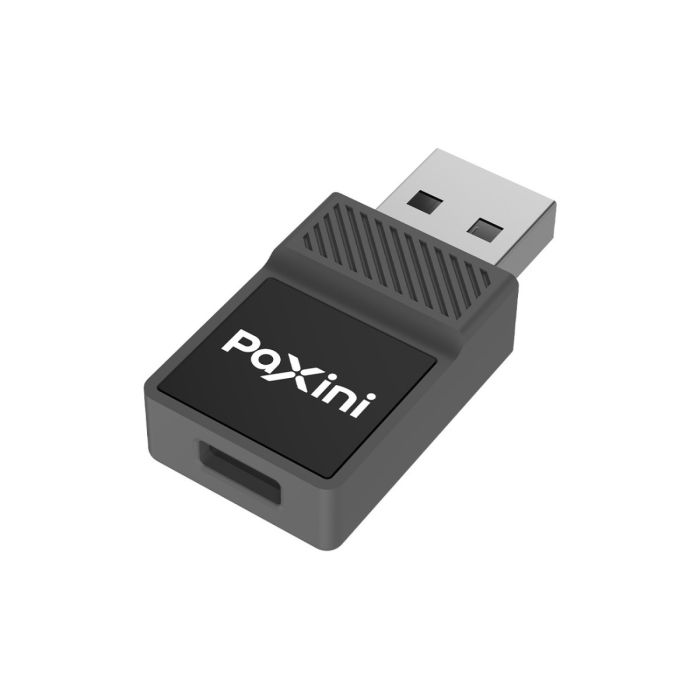
In stock
- PART #:
- Single-channel serial port adapter board
- ORIGIN:
- China
- AVAILABILITY:
- SUBJECT TO AVAILABILITY
- SKU:
- Paxini-Single-channel-serial-port-adapter-board
Paxini Single-Channel Serial Port Adapter Board (Single-channel serial port adapter board)
PaXini markets its tactile technology under the concept of ITPU (multi-dimensional tactile sensing units), positioning these sensors as a foundation for more capable robotic manipulation and “embodied intelligence” by enabling systems to sense contact beyond what vision alone can provide. Within that ecosystem, adapter boards and communication hubs are practical components: tactile sensors can produce high-rate signals and may require structured wiring, power, and data conversion to be usable in common development environments such as laptops, industrial PCs, and robot controllers.
Publicly accessible information on the Single-Channel Serial Port Adapter Board focuses on its role as a single-channel communications bridge, its compact “USB-stick-sized” design, and its support for chaining (serial connection) of certain tactile sensors.
Design and Features
USB-A direct plug-in form factor
PaXini’s official mall listing describes the board as USB-A direct plug-in and plug-and-play (“即插即用”), and notes that its physical size is comparable to a USB flash drive (“U盘大小”). This design choice targets fast setup during development: engineers can connect the adapter directly to a PC without an external USB cable or enclosure, reducing wiring complexity for single-sensor experiments.
Single-channel tactile signal communications
The same listing states that the adapter supports one channel of tactile signal communication (“支持1路触觉信号通信”). In practice, “single-channel” accessories are typically used for:
-
bringing up a single tactile sensor quickly,
-
validating sensor behavior and calibration,
-
running a single-sensor data stream into a host application,
-
creating minimal demo rigs for grippers or fingertips before scaling.
A separate reseller-style description also summarizes it as a communication accessory for PX-6AX GEN3 and emphasizes single-channel serial communication support.
Support for fingertip and fingerpad sensor chaining
PaXini’s mall listing explicitly notes support for serial chaining of fingertip and fingerpad tactile sensors (“支持指尖、指腹触觉传感器串联”). In tactile sensing deployments, fingertip and fingerpad sensors are common mechanical targets because they sit at the point of contact during grasping. Chaining capability can simplify wiring when multiple sensing elements are arranged in a finger-like structure, though the public page only confirms that chaining is supported—not the maximum chain length, bandwidth limits, or supported sensor models.
Technology and Specifications
What is explicitly specified in public listings
Publicly available pages provide a small set of concrete attributes for the Single-Channel Serial Port Adapter Board:
-
Category / purpose: communication accessory for tactile sensor integration
-
Interface / physical connection: USB-A direct insertion; plug-and-play
-
Communications scope: single-channel tactile signal communication
-
Form factor: “USB flash drive size”
-
Sensor connection note: supports chaining of fingertip/fingerpad tactile sensors
-
Region note: “Mainland China version (for use in mainland China only)”
Relationship to PaXini’s broader communications accessories
PaXini’s accessory catalog includes higher-capacity communications components such as a high-speed communication integration board (sold separately), which is positioned to support broader tactile sensor integration via USB-to-PC and UART-to-controller pathways. The existence of multiple accessory tiers suggests a scaling approach:
-
a single-channel adapter for fast bring-up and small prototypes, and
-
higher-speed / more integrated boards for multi-sensor “full-hand” or multi-channel deployments.
Applications and Use Cases
Bench testing and sensor evaluation
The most direct use case is bench testing of a single tactile sensor element—particularly fingertip or fingerpad units—where a developer needs to confirm that the sensor enumerates, streams data, and behaves consistently under applied contact forces. The “plug-and-play USB-A” design is consistent with this role.
Prototyping tactile-enabled grippers and fingertips
In early-stage gripper prototypes, teams often add one tactile sensor to validate improvements in grasp stability or contact detection. A single-channel adapter can serve as the first step before migrating to multi-channel hubs if the design expands to multiple fingers or multiple contact points.
Educational and research setups
In teaching labs and robotics research, tactile sensing is frequently used to demonstrate contact-rich manipulation concepts—such as slip, compliance, and force modulation—alongside vision. PaXini’s public materials frame ITPU tactile sensing as a way to grant robots multi-dimensional touch perception in complex scenarios, which aligns with educational goals in embodied AI and robotic manipulation.
Pilot integrations that require minimal wiring
For demos or pilot deployments where the goal is proof-of-concept rather than long-term industrialization, minimal wiring and quick replacement matter. A USB-stick-sized adapter can reduce setup friction—especially in portable rigs or demonstrations.
Advantages / Benefits
Fast bring-up for a single tactile channel
The primary advantage is simplicity: one channel, USB-A direct insertion, and a product description that emphasizes immediate use. This is valuable when a team wants to validate tactile sensing quickly before investing time in full system integration.
Compact physical footprint
A “USB drive sized” form factor makes the adapter easy to transport and use in field demos or distributed team environments (lab → office → client site).
Clear role within a scalable accessory stack
Because PaXini also sells higher-capacity communication boards, the single-channel adapter can function as a stepping stone: evaluate tactile sensing with minimal setup, then transition to more scalable communication hardware if the project grows.
FAQ Section
What is the PaXini Single-Channel Serial Port Adapter Board?
It is a PaXini communication accessory for tactile sensor integration that supports one channel of tactile signal communication and is marketed as a simple USB-A, plug-and-play adapter.
How does the PaXini Single-Channel Serial Port Adapter Board work?
Public listings describe it as a USB-A direct plug-in board that enables single-channel serial communication for tactile signals, serving as an interface between compatible tactile sensors and a host device (such as a PC).
Why is the PaXini Single-Channel Serial Port Adapter Board important?
Tactile sensing systems often require practical communication and wiring accessories. A single-channel adapter lowers the barrier to evaluating tactile sensors in early prototypes, labs, and demos—supporting the broader goal of adding touch sensing to robotic manipulation workflows.
What are the benefits of the PaXini Single-Channel Serial Port Adapter Board?
The publicly stated benefits include USB-A plug-and-play convenience, USB-drive-sized compactness, and single-channel tactile signal communication, with support noted for chaining fingertip and fingerpad tactile sensors.
Summary
The PaXini Single-Channel Serial Port Adapter Board is a compact USB-A, plug-and-play communication accessory designed to help developers integrate PaXini tactile sensors—especially fingertip and fingerpad units—into early prototypes and bench-testing setups using single-channel tactile signal communication. While public listings provide only high-level specifications (single channel, USB-A, “USB drive sized,” and region notes), its role is clear within PaXini’s tactile ecosystem: reduce integration friction for first experiments with multi-dimensional touch, before scaling to higher-capacity communication hardware as sensor count and system complexity increase.
Specifications
| PART # | Single-channel serial port adapter board |
|---|