
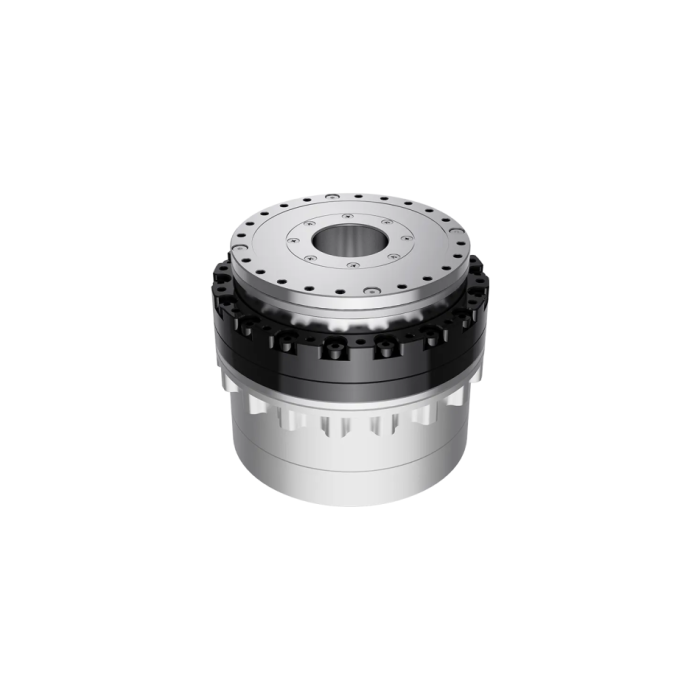
Ti5 Robotics 100-120 Lightweight Joint Module
In stock
- ماركة:
- TI5 ROBOTICS
- نموذج:
- 100-120
- ORIGIN:
- الصين
- Warranty:
- 12 شهر
- AVAILABILITY:
- SUBJECT TO AVAILABILITY
- SKU:
- Ti5-Robotics-Joint-Module-100-120
Ti5 Robotics 100-120 Lightweight Joint Module
Ti5 Robotics 100-120 Lightweight Joint Module is an integrated rotary actuator developed for the joints of humanoid robots, collaborative robot arms, and other advanced motion systems. The module combines motor, gearing, encoder feedback, and drive electronics in a single compact housing, and is offered in four documented versions and five gear ratios. With peak torque figures ranging from 267 N·m up to 459 N·m depending on the selected ratio, it sits toward the high-torque end of the manufacturer's lightweight joint module range.
Background
The shift toward integrated joint actuation
Traditional robot joints were assembled from separately sourced motors, reducers, encoders, and drives, which increased wiring complexity, weight, and integration time. Integrated joint modules reverse that approach: the complete actuation chain arrives as one tested unit with a defined mechanical interface and a digital communication bus. The manufacturer describes the 100-120 as a modular, integrated, and lightweight design intended for flexible assembly and easy maintenance, with a highly integrated layout that optimizes space utilization and performance output for modern intelligent equipment.
Where the 100-120 fits in the Ti5 lineup
The producer's catalogue spans lightweight joint modules, an intelligent bionic hand, collaborative robot arms, and humanoid robot actuators. Within that portfolio, the 100-120 family is a lightweight joint module series identified by part numbers in the CRA-RI100-120-PRO-2 group. It targets applications the manufacturer lists for its actuator products, including industrial production, scientific research and education, medical and rehabilitation projects, and commercial scenarios. It is a component for robot builders rather than a finished machine: designers pair it with structural links, controllers, and software to form complete joints and limbs.
Technical Specifications
The following tables preserve the published configuration distinctions. Blank, malformed, or ambiguous source values are not confirmation of a capability; confirm the selected configuration during quotation.
CRA-RI100-120-PRO-2-XXX
| Gear Ratio | Peak Torque (N.m) | Max Allowable Torque At Average Load (N.m) | Rated Torque @ 2000RPM (N.m) | Peak Speed (RPM) | Rated Speed (With 1/2 Rated Torque) (RPM) | Gear Backlash (arcsec) |
| 51 | 267 | 133 | 94 | 55 | 44 | 20 |
| 81 | 376 | 206 | 146 | 37 | 29 | 20 |
| 101 | 411 | 267 | 169 | 29 | 22 | 10 |
| 121 | 436 | 267 | 169 | 24 | 18 | 10 |
| 161 | 459 | 267 | 169 | 18 | 12 | 10 |
| Rated Power(W) | Supply Voltage(V) | Max Continuous Current(A) | Rated Current(A) | Torque Constant (N.m/A) | Encoder Resolution (bit) | Communication Bus |
| 1000 | 24-48 | 20.2 | 15.8 | 0.175 | 16 | CAN |
| Hollow Shaft(mm) | Length(mm) | Mass(kg) | Inertia(g * c㎡) |
| 32 | 100.5±0.5 | 2.52 | 3910.2 |
CRA-RI100-120-PRO-2-XXX-B
| Gear Ratio | Peak Torque (N.m) | Max Allowable Torque At Average Load (N.m) | Rated Torque @ 2000RPM (N.m) | Peak Speed (RPM) | Rated Speed (With 1/2 Rated Torque) (RPM) | Gear Backlash (arcsec) |
| 51 | 267 | 133 | 94 | 55 | 44 | 20 |
| 81 | 376 | 206 | 146 | 37 | 29 | 20 |
| 101 | 411 | 267 | 169 | 29 | 22 | 10 |
| 121 | 436 | 267 | 169 | 24 | 18 | 10 |
| 161 | 459 | 267 | 169 | 18 | 12 | 10 |
| Rated Power(W) | Supply Voltage(V) | Max Continuous Current(A) | Rated Current(A) | Torque Constant (N.m/A) | Encoder Resolution (bit) | Communication Bus |
| 1000 | 24-48 | 20.2 | 15.8 | 0.175 | 16 | CAN |
| Hollow Shaft(mm) | Length(mm) | Mass(kg) | Inertia(g * c㎡) |
| 32 | 121.5±0.5 | 3.21 | 4744.7 |
CRA-RI100-120-PRO-2-XXX-2E-EC
| Gear Ratio | Peak Torque (N.m) | Max Allowable Torque At Average Load (N.m) | Rated Torque @ 2000RPM (N.m) | Peak Speed (RPM) | Rated Speed (With 1/2 Rated Torque) (RPM) | Gear Backlash (arcsec) |
| 51 | 267 | 133 | 94 | 55 | 44 | 20 |
| 81 | 376 | 206 | 146 | 37 | 29 | 20 |
| 101 | 411 | 267 | 169 | 29 | 22 | 10 |
| 121 | 436 | 267 | 169 | 24 | 18 | 10 |
| 161 | 459 | 267 | 169 | 18 | 12 | 10 |
| Rated Power(W) | Supply Voltage(V) | Max Continuous Current(A) | Rated Current(A) | Torque Constant (N.m/A) | Encoder Resolution (bit) | Communication Bus |
| 1000 | 24-48 | 20.2 | 15.8 | 0.175 | 16/18 | CAN/EtherCAT |
| Hollow Shaft(mm) | Length(mm) | Mass(kg) | Inertia(g * c㎡) |
| 32 | 103.5±0.5 | 2.51 | 5962.63 |
How do the four versions of the 100-120 differ?
The base CRA-RI100-120-PRO-2-XXX is the shortest and lightest CAN-bus version. The -B version is longer and heavier, which typically reflects an added mechanical or electrical option, though the source does not spell out the suffix meaning. The -2E-EC version adds a dual-encoder arrangement with 16/18-bit resolution and supports CAN or EtherCAT communication, suited to systems that need deterministic, high-rate fieldbus control. The fourth version, -B-2E-EC, combines both suffixes by its naming but has no published parameter table, so its exact figures should be confirmed with the supplier before specifying it. Torque and speed behaviour across all versions is governed by the chosen gear ratio: lower ratios (51, 81) favour speed, while higher ratios (101, 121, 161) deliver greater torque with tighter 10-arcsecond backlash.
Who is the Ti5 Robotics 100-120 Lightweight Joint Module for?
This module is aimed at engineering teams building robots rather than end consumers. Humanoid robot developers can use it for hip, knee, or shoulder joints where torque density matters. Collaborative robot arm manufacturers can standardize on the family across axes by mixing gear ratios. Research laboratories and universities benefit from the integrated design, which shortens prototyping cycles, and the hollow shaft simplifies cable management in multi-joint chains. System integrators designing custom automation, exoskeleton research platforms, or mobile manipulators will find the 24–48 V supply range convenient for battery-powered systems.
What is the Ti5 Robotics 100-120 Lightweight Joint Module used for?
- Primary joints in humanoid robot legs and torsos, where high peak torque supports dynamic movement.
- Base and shoulder axes of collaborative robot arms that require compact, integrated actuation.
- Scientific research and education platforms, where a documented, modular actuator accelerates experiments.
- Medical and rehabilitation robotics development projects listed among the manufacturer's application areas.
- Commercial service robot prototypes that need quiet, precise rotary motion with low backlash.
- Custom automation and mechatronic test rigs where a hollow-shaft actuator simplifies wiring and sensor routing.
Pricing and Availability
Pricing for integrated joint modules depends on the selected version, gear ratio, encoder and bus configuration, and order quantity, so figures are provided on a quotation basis rather than as a fixed list price. Availability and lead times also vary with configuration. To obtain current pricing for a specific CRA-RI100-120 version, request a quote through this listing and specify the version suffix, gear ratio, and intended application.
Frequently Asked Questions
What gear ratios are available for the 100-120 module?
Five ratios are documented: 51, 81, 101, 121, and 161. Peak torque rises from 267 N·m at ratio 51 to 459 N·m at ratio 161, while peak speed falls from 55 RPM to 18 RPM.
Which communication interfaces does it support?
The base and -B versions use a CAN bus with a 16-bit encoder. The -2E-EC version offers CAN or EtherCAT with 16/18-bit encoder resolution.
Does the module have a hollow shaft?
Yes. Documented versions provide a 32 mm hollow shaft, allowing cables, signal lines, or other services to pass through the rotation axis.
What supply voltage and power does it require?
The documented versions are rated at 1000 W with a 24–48 V supply, 15.8 A rated current, and 20.2 A maximum continuous current.
How much does the module weigh?
Mass varies by version: 2.52 kg for the base unit, 3.21 kg for the -B version, and 2.51 kg for the -2E-EC version. The -B-2E-EC version's mass is not published in the source.
Is the 100-120 a complete robot or robot arm?
No. It is a joint actuator component. Building a functioning robot additionally requires structure, a controller, power distribution, and software developed by the integrator.
Where can I buy the Ti5 Robotics 100-120 Lightweight Joint Module and what does it cost?
It is available through this listing on a quotation basis. Submit a quote request with your preferred version and gear ratio, and the sales team will confirm current pricing, configuration options, and lead time.
Summary
The Ti5 Robotics 100-120 Lightweight Joint Module is a high-torque, integrated rotary actuator family offered in four versions and five gear ratios, with CAN or CAN/EtherCAT communication, a 32 mm hollow shaft, and masses from roughly 2.5 to 3.2 kg across documented versions. Its combination of torque density, low backlash, and modular packaging makes it a practical building block for humanoid robots, collaborative arms, and research platforms. For specification review and a tailored quotation, this page is the starting point.